
Welcome To CB Piping System Co., ltd., ...

Workflow of Biomass Hot Air Furnace
Release time:
2025-08-08
Biomass hot air furnace converts biomass fuel to hot air via fuel preparation, combustion, heat exchange, emission treatment, etc., with intelligent control, optimizing efficiency and reducing emissions for industrial and agricultural use.

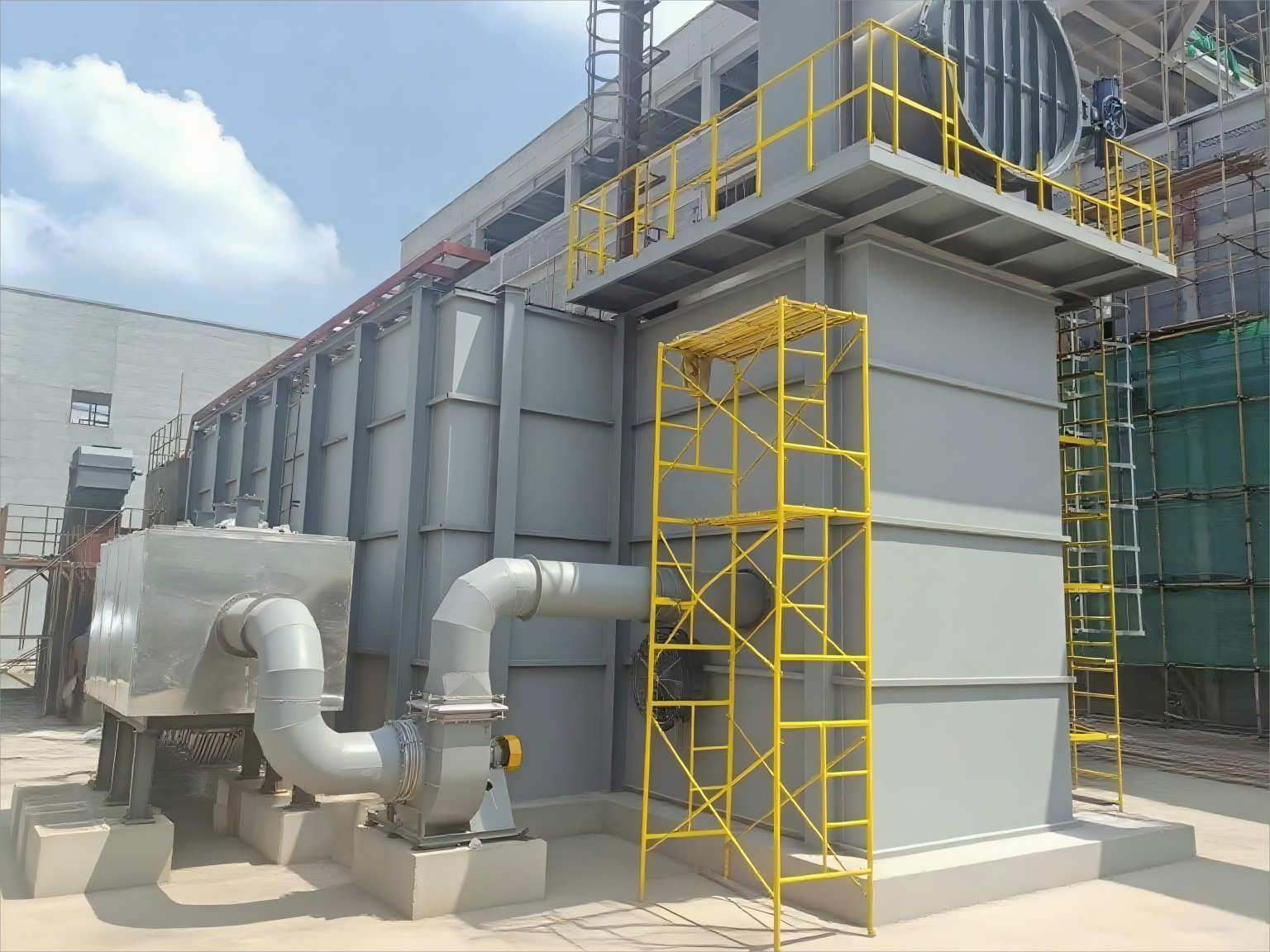
The workflow of a biomass hot air furnace involves multiple stages, with the goal of converting biomass fuel into thermal energy and ultimately outputting it as hot air for various industrial and agricultural applications. Its core processes include fuel preparation, combustion, heat exchange, and emission treatment, among others (Lu et al., 2024)[1] (Sheng et al., 2024)[2].
1. Fuel Preparation
Biomass fuels come in diverse types, such as crop straw, wood waste, and energy crops (Ali et al., 2021)[3]. Fuel pretreatment is critical for ensuring combustion efficiency and stability. Common pretreatment methods are as follows:
- Crushing and pulverizing: Larger biomass raw materials are broken or ground into smaller particles to increase their surface area, facilitating more efficient combustion (Zhang et al., 2018)[4].
- Drying: Controlling the moisture content of biomass fuel is key to enhancing combustion efficiency. High moisture content reduces combustion temperature and raises the risk of incomplete combustion (Sheng et al., 2024)[2].
- Compression molding: Pulverized biomass is compressed into pellets or briquettes to improve energy density, simplify storage and transportation, and enhance combustion performance (Lu et al., 2024)[1].
2. Combustion Process
Combustion is the core of a biomass hot air furnace. Depending on furnace design and application needs, there are several combustion methods (Cordiner et al., 2016)[5] (Wang et al., 2023)[6]:
- Grate combustion: Biomass fuel burns on a grate, with air entering from below or above to fully mix with the fuel. This method is suitable for fuels with larger particles and higher moisture content (Wang et al., 2023)[6] (Mei-Qian et al., 2012)[7]. Optimizing air distribution on the grate can improve combustion efficiency and reduce pollutant emissions (Wang et al., 2023)[6]. Studies show that different air distribution patterns—such as front-enhanced, uniform, or rear-enhanced—affect the temperature field and flue gas composition in the furnace (Wang et al., 2023)[6].
- Suspension combustion: Biomass fuel is pulverized into fine powder and injected into the furnace to burn in mixture with air. This method is ideal for small biomass particles, offering high combustion efficiency and fast response (Zhang et al., 2018)[4]. However, the combustion stability of biomass powder is poor and requires further research (Zhang et al., 2018)[4].
- Fluidized bed combustion: Biomass fuel burns in a fluidized bed of materials (typically sand or ceramic particles). This method features uniform combustion temperatures, high heat transfer efficiency, and broad fuel adaptability (Cordiner et al., 2016)[5].
Proper air supply control is essential for complete combustion of biomass fuel. Multi-channel air supply is an effective optimization method that ensures full combustion, improving drying efficiency and quality (Sheng et al., 2024)[2].
3. Heat Exchange
High-temperature flue gas generated by combustion transfers heat to air through a heat exchanger. Common types of heat exchangers include:
- Tubular heat exchangers: Flue gas flows inside tubes, while air flows outside, with heat transferred through the tube walls. These exchangers have a simple structure and are easy to manufacture and maintain (Ilic et al., 2023)[8].
- Finned heat exchangers: Fins added to tube walls increase the heat exchange area, boosting efficiency. They are well-suited for air-heating applications (Ilic et al., 2023)[8].
Heat exchanger design must consider heat transfer efficiency, pressure drop, and corrosion resistance. A well-designed exchanger maximizes heat utilization from flue gas, enhancing the overall thermal efficiency of the hot air furnace (Lu et al., 2024)[1].
4. Emission Treatment
Biomass combustion produces flue gas pollutants, including particulate matter, nitrogen oxides (NOₓ), and sulfur dioxide (SO₂). To meet environmental standards, flue gas treatment is necessary (Wang et al., 2023)[6]. Common treatment technologies include:
- Dust removal: Using cyclone separators, bag filters, or electrostatic precipitators to remove particulate matter (Wang et al., 2023)[6].
- Denitration: Employing selective catalytic reduction (SCR) or selective non-catalytic reduction (SNCR) to reduce NOₓ (Wang et al., 2023)[6].
- Desulfurization: Removing SO₂ using methods such as limestone-gypsum or ammonia-based processes.
5. Intelligent Temperature Control System
To precisely control the furnace’s outlet temperature, an intelligent temperature control system is typically used. Equipped with sensors, the system monitors outlet temperature in real time and automatically adjusts fuel supply and air flow to maintain the set target temperature (Sheng et al., 2024)[2]. This is particularly critical for applications with strict temperature requirements, such as grain drying (Sheng et al., 2024)[2].
6. Thermal Efficiency Analysis
Thermal efficiency is a key indicator of a biomass hot air furnace’s performance. Major factors influencing efficiency include fuel moisture content, combustion completeness, heat exchanger efficiency, and flue gas treatment effectiveness (Jin et al., 2020)[9] (Lu et al., 2024)[1]. Experimental analysis and numerical simulation help identify ways to improve efficiency (Jin et al., 2020)[9].
In summary, the workflow of a biomass hot air furnace involves multiple interconnected stages, each impacting its performance. Optimizing fuel pretreatment, combustion, heat exchanger design, and emission treatment can enhance thermal efficiency, reduce pollutant emissions, and enable the efficient utilization of biomass energy [citation:5, 3].
More information


Online Message
Do you have any intention of cooperation? You can leave your contact information, and we will be happy to serve you.
Contact us
Contact: Rosie
FAX: +86-571-86726270



Room 605, 6th Floor, Building 2, East Station Garden Business Center, Shangcheng District, Hangzhou City, Zhejiang Province