
Welcome To CB Piping System Co., ltd., ...
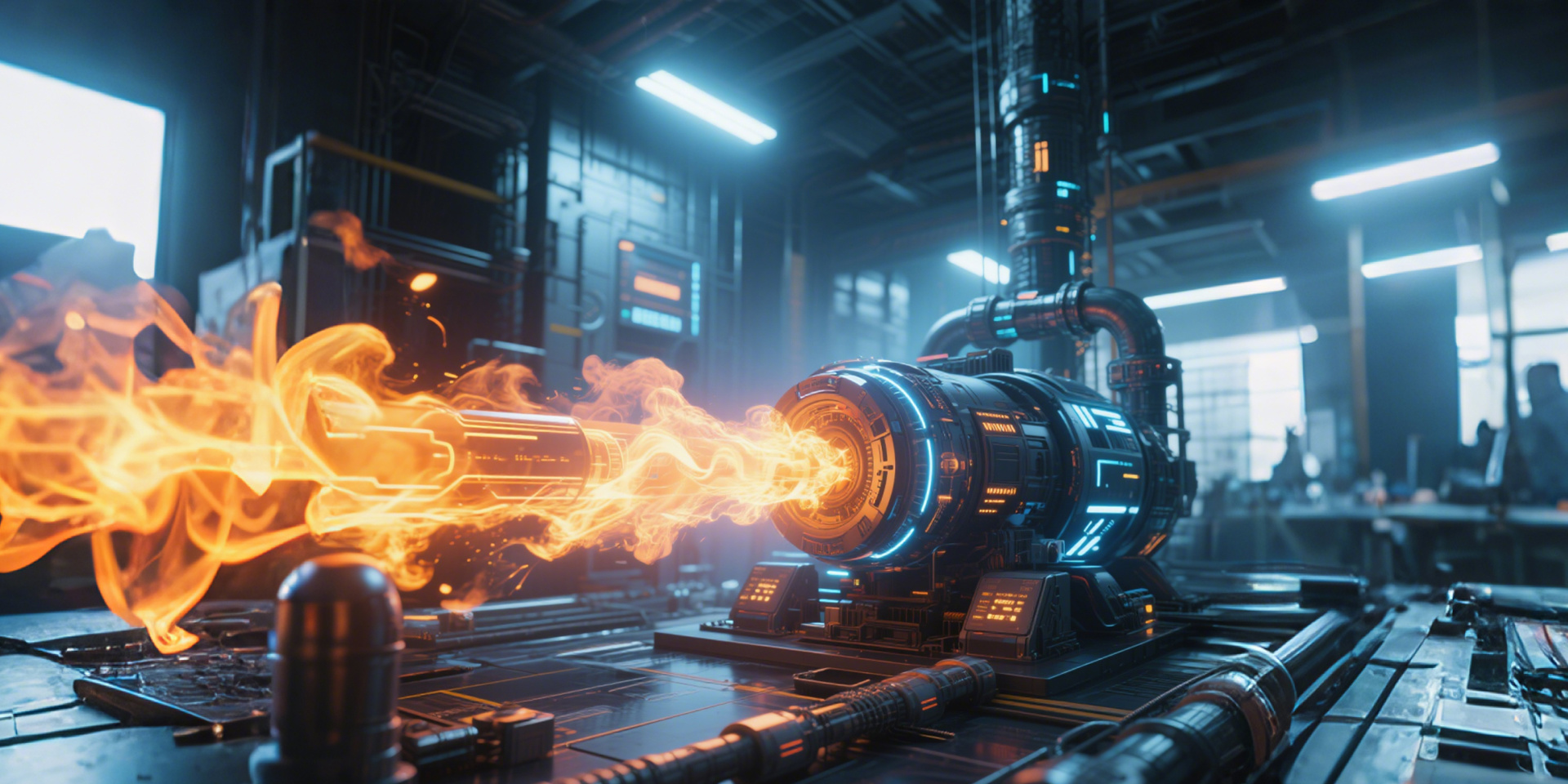
Direct-Fired Gas Hot Air Furnace – High-Efficiency Heating Solution for Industrial Drying and Process Applications
Release time:
2026-04-09
Direct-fired gas hot air furnace delivers rapid, efficient heating with high thermal efficiency, uniform airflow, and reliable performance for drying, curing, and industrial heating.

A Direct-fired Gas Hot Air Furnace is a highly efficient heating system designed to generate and deliver large volumes of hot air for industrial and commercial applications. Unlike indirect-fired systems, this furnace operates by burning fuel—typically natural gas, liquefied petroleum gas (LPG), or other clean gases—directly within the airflow. This direct combustion process eliminates the need for a heat exchanger, allowing nearly all generated heat to be transferred into the air stream. As a result, the system achieves exceptionally high thermal efficiency, often exceeding 90%, making it an energy-saving and cost-effective solution.
The working principle of a direct-fired gas hot air furnace is relatively straightforward yet highly effective. Fuel is supplied to a burner where it mixes with air and combusts within a combustion chamber or directly in the airflow path. The heat produced is immediately absorbed by the moving air, which is then distributed through ducts or outlets to the target area. This direct heating method ensures rapid temperature rise and consistent heat delivery, making it ideal for processes that require quick and uniform heating.
One of the most significant advantages of this type of furnace is its high thermal efficiency. Since there is no heat exchanger involved, there are minimal heat losses during the transfer process. This allows the system to utilize almost all the energy produced during combustion. Additionally, the absence of a heat exchanger simplifies the structure, reducing equipment weight, initial investment, and maintenance requirements.
Another key feature is its ability to provide uniform airflow and temperature distribution. The furnace is typically equipped with high-performance fans and optimized air duct systems that ensure even heat dispersion. This is particularly important in applications such as drying, curing, and heating, where consistent temperature is critical to product quality and process efficiency. Advanced control systems enable precise temperature regulation, allowing operators to adjust settings based on specific requirements.
Direct-fired gas hot air furnaces are widely used across various industries. In the agricultural sector, they are used for drying grains, seeds, and crops. In the food industry, they support processes such as baking, roasting, and dehydration. In manufacturing, they are essential for paint curing, coating drying, textile processing, and chemical production. They are also commonly used in warehouses, workshops, and large indoor spaces for space heating and ventilation.
Durability and reliability are essential aspects of the furnace design. High-quality materials such as heat-resistant steel and corrosion-resistant components are used to ensure long service life even under demanding operating conditions. The burners are engineered for stable combustion, low emissions, and high efficiency. Safety is also a top priority, with features such as flame failure protection, overheat protection, gas leak detection, and automatic shutdown systems integrated into the design.
Energy efficiency and environmental performance are increasingly important in modern industrial equipment. Direct-fired gas hot air furnaces are designed to meet strict emission standards, producing relatively low levels of pollutants when using clean fuels like natural gas. Their high efficiency also reduces fuel consumption, contributing to lower operating costs and reduced environmental impact. Some advanced models include energy-saving modes and intelligent control systems that optimize performance based on real-time conditions.
Ease of installation and maintenance is another advantage. The simplified structure without a heat exchanger means fewer components that can wear out or require servicing. Many systems are modular, allowing for quick assembly and flexible configuration. Routine maintenance typically involves inspecting burners, cleaning filters, and checking control systems, which can be performed with minimal downtime.
Modern direct-fired furnaces often incorporate smart technology, enabling remote monitoring and automation. Operators can track temperature, airflow, fuel consumption, and system status through digital interfaces or integrated control systems. This improves operational efficiency, enables predictive maintenance, and enhances overall system management.
In conclusion, the Direct-fired Gas Hot Air Furnace is a powerful, efficient, and versatile heating solution suitable for a wide range of industrial and commercial applications. Its direct combustion design ensures maximum heat utilization, rapid heating, and consistent performance. With benefits such as energy efficiency, ease of use, low maintenance, and reliable operation, it has become an essential piece of equipment in modern production and processing environments.
More information


Online Message
Do you have any intention of cooperation? You can leave your contact information, and we will be happy to serve you.
Contact us
Contact: Rosie
FAX: +86-571-86726270



Room 605, 6th Floor, Building 2, East Station Garden Business Center, Shangcheng District, Hangzhou City, Zhejiang Province